
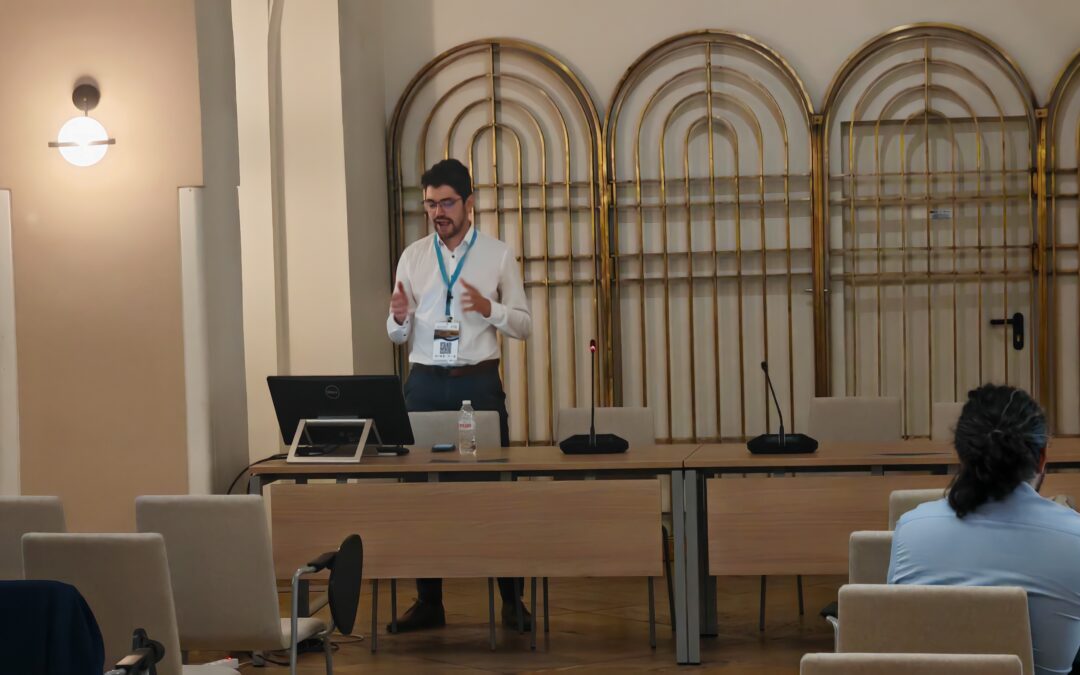
Our colleague, András Igari PhD, participated in the 65th ERSA Conference held in Sofia in August 2026. ERSA (European Regional Science Association) is Europe’s most important regional science organization, with hundreds of researchers participating in its conferences every year. Our colleague participated in the work of the section of Urban, Regional, Territorial and Local Resilience and gave a presentation entitled ’The economic impact of the COVID-19 crisis on multiple levels – from European regions to Hungarian settlements’. The presentation was prepared within the framework of an OTKA research grant awarded to a consortium of the HÉTFA Research Institute and the Department of Regional Science of Eötvös Loránd University
Our colleague investigated the short- and medium-term economic and labour market impacts of the COVID-19 pandemic in Europe’s NUTS 3 regions, as well as in municipalities and districts of Hungary. His analysis, based on literature review and regional statistical data, highlighted that the economic and labour market disruptions caused by the COVID-19 crisis were significant in 2020, but were followed by a rapid recovery from 2021 onwards. However, the crisis brought some long-term, structural changes as well. In Europe, a notable decline in youth employment, the spread of specialised forms of work, and the crisis of certain sectors were notable, whilst in Hungary the rise in long-term unemployment and the intensification of existing structural challenges (e.g. the depletion of labour market supply, the decline of low value-added jobs in the private sector) were specifically observable. These changes weakened the country’s resilience to subsequent shocks and caused problems primarily in (semi-)peripheral regions.