“Great cities are not built for cars. They are built for people.” – Janette Sadik-Khan
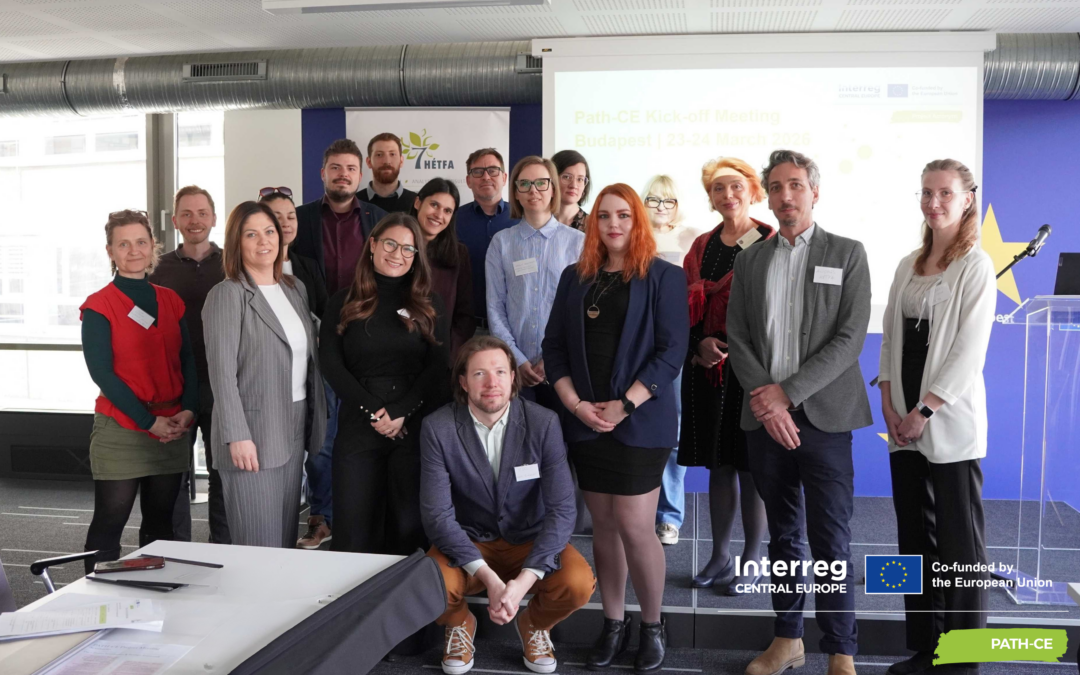
How can this mindset be translated into everyday urban practice in Central Europe? This is the question at the heart of the PATH-CE (Pedestrian Access and Tactical Hubs for Central Europe) project, which officially kicked off on 23–24 March 2026 in Budapest, hosted by HÉTFA Research Institute with the participation of experts from four countries.
Why is this needed?
As Gábor Balás, Managing Director of HÉTFA Research Institute, highlighted during the opening:
“A city is successful when people choose to walk.”
Over the past decades, cities across Central Europe have increasingly been shaped by car use. While this has improved mobility in many cases, it has also led to growing challenges: congestion, air pollution, safety risks, and the gradual loss of public space.
This issue is particularly critical in smaller cities, where walking is often not a viable option even for short distances due to fragmented and poorly connected pedestrian networks.
2 days shaping the direction of the project
The two-day kick-off meeting marked not only the launch of the project, but also the beginning of a shared reflection among partners — including Szarvas Város Önkormányzata (Szarvas City Municipality), Grad Metković (City of Metković), Město Žďár nad Sázavou (Municipality of Žďár nad Sázavou), and Rzeszowska Agencja Rozwoju Regionalnego Spółka Akcyjna (Rzeszów Regional Development Agency) – on how to bring walking and active mobility back to the centre of urban life.
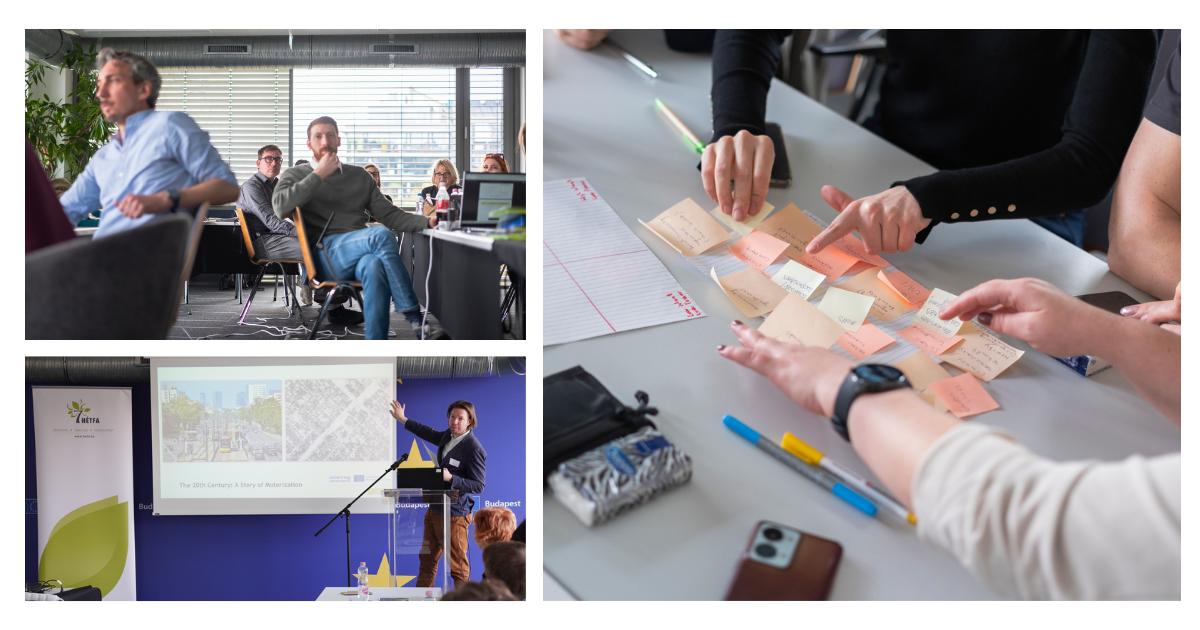
On the first day, partners met in person and worked in a World Café format on tactical urbanism tools – focusing on pedestrian experience, greening, and small-scale interventions.
The second day focused on strategic planning: participants jointly shaped the directions of active mobility, explored the Urban Living Lab methodology, and defined the first milestones, complemented by a professional study walk through relevant sites in Budapest.
What does the PATH-CE project do?
Running from February 2026 to January 2028 and co-funded by the European Union through the Interreg Central Europe programme, the project aims to reduce car dependency and make walking and active mobility more attractive in cities across the region.
The project will test small-scale, tactical, pedestrian-friendly interventions across several pilot locations, including Szarvas, Metković, Žďár nad Sázavou, and the suburban area of Rzeszów.
The pilot actions focus on three main areas:
- improving the walking experience and wayfinding
- introducing green and climate-adaptive public space solutions
- implementing small-scale infrastructure improvements to make urban spaces safer and more accessible
As the lead partner, HÉTFA Research Institute is responsible not only for coordinating the consortium but also for guiding the project’s professional direction. Through its research, analytical, and policy work, HÉTFA ensures that project results are translated into practical, adaptable solutions for cities across the region.