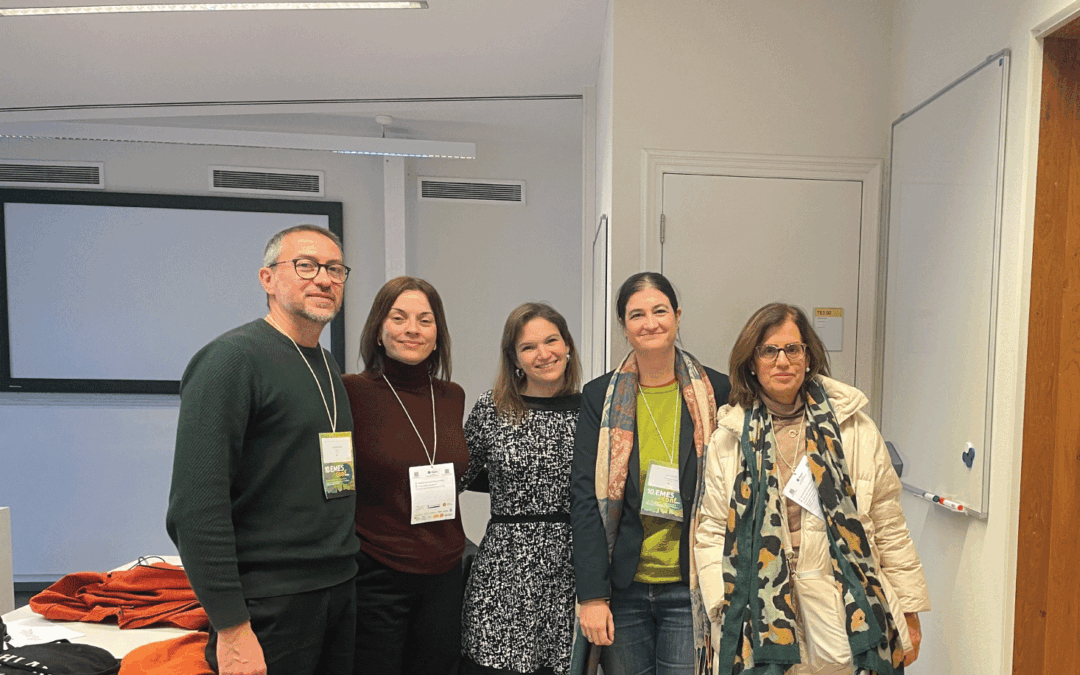
Our colleague, Luca Koltai coordinated a panel at the 10th EMES International Research Conference on Social Enterprise, focusing on the ESIRA Horizon Europe project, in which HÉTFA is a partner. The session took place on 6 November, 2025, hosted by Erasmus University Rotterdam and Utrecht University. Scholars contributed to the panel from organisations such as the University of Burgos, Euricse, the Carinthia University of Applied Sciences, Eurac Research, the University of Eastern Finland and the Centre for Social Innovation in Vienna. The ESIRA project was discussed side by side with it’s sister project, the SERIGO project.
As one of the foremost global gatherings for social economy research, the EMES conference showcased cutting-edge research addressing today’s most pressing social and territorial challenges. The event reaffirmed the pivotal role of the social economy in creating inclusive and sustainable societies.
The panel, titled ‘Enhancing social innovation through the social economy in rural areas’, brought together four research papers created as part of the ESIRA and SERIGO projects. They focused on how social economy organisations, social enterprises and grassroots initiatives were addressing persistent challenges in rural, remote and mountainous regions. The presentations focused on innovative models of elder care, the developmental impact of social economy organisations, intersectional approaches to rural vulnerabilities, and the effects of the de-democratisation of governance on social entrepreneurship in Hungary.
Rural regions across Europe continue to face demographic decline, reduced access to essential services, and widening socio-economic vulnerabilities. The ESIRA and SERIGO projects were designed to explore how social economy actors can strengthen resilience, inclusion, and quality of life in these contexts. The panel aimed to share evidence that cooperatives, social enterprises, and community organisations are creating innovative, place-based solutions. By bringing together comparative research and case studies from across Europe, the session contributed to a deeper understanding of how social economy initiatives can foster more inclusive, sustainable rural development.