
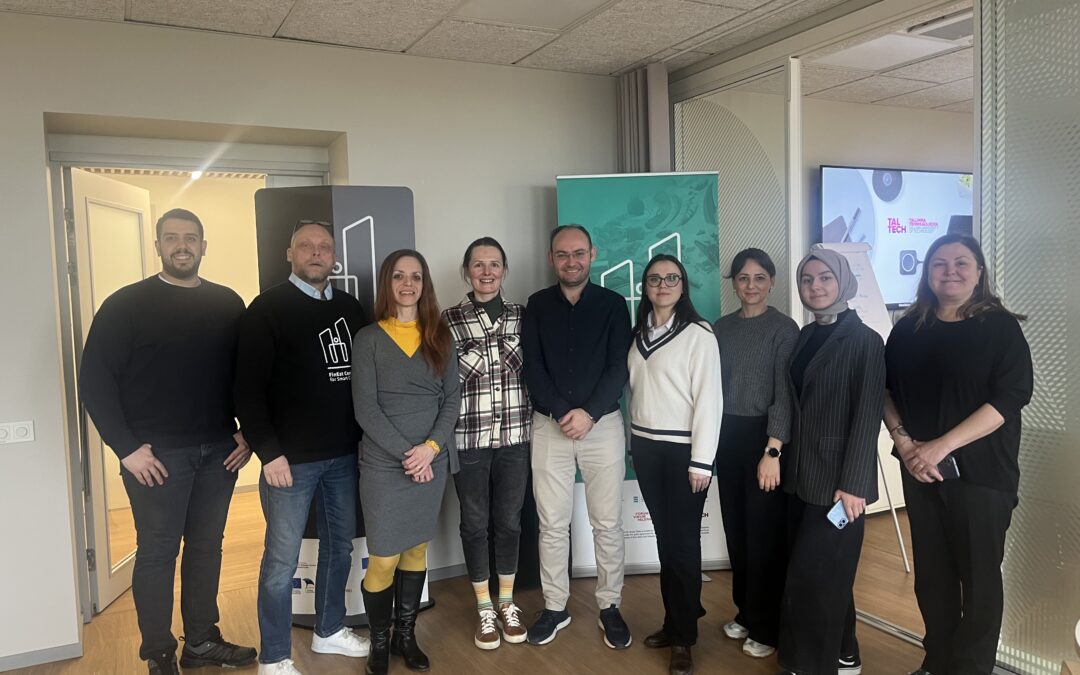
As part of the MAPIT project, Virág Zsár, Senior Advisor at HÉTFA, and Beáta Lázár, Senior Communication Expert, delivered research management and communication training during the Peer Learning Activity held in Tallinn on 16–17 March 2026. Hosted by the FinEst Centre for Smart Cities, the two-day event brought together representatives of HÉTFA, Tallinn University of Technology, KTO Karatay University, METU BILTIR Center, IZTECH and the Institute for Future Research, creating a platform for knowledge exchange and stronger institutional cooperation.
MAPIT aims to bridge the gap between innovative SMEs, research entities in widening countries and European research and innovation networks, while strengthening international cooperation and university–industry collaboration. Within the project, HÉTFA leads the Future Studies Programme work package, contributing to the development of Research Management capacities through needs-based training, peer learning and institutional knowledge exchange.
As leader of the MAPIT Future Studies Programme work package and co-organiser of the Tallinn activity, HÉTFA contributed two interactive training sessions. “Good Practices in Building up Research Support: Findings from the RM Roadmap Interviews” presented European good practices in setting up and reinforcing Research Support Offices, with a focus on professional development, leadership, team management, business models and the visibility of Research Management. Through discussion-based and practice-oriented reflection, participants considered how research support structures and services could be strengthened in their own institutional contexts.
The workshop “From Planning the Impact Pathway to Knowledge Valorisation” focused on requirements and good practices in communication, dissemination and exploitation. Practical exercises supported participants in linking project objectives, expected impact and the uptake of results within a coherent approach, helping them connect communication activities more closely with dissemination, exploitation and knowledge valorisation. Other parts of the programme addressed consortium building, proposal writing, post-award project management and peer-to-peer knowledge exchange.
Learn more about the project: https://mapitproject.eu/